Friday, January 10, 2014

Sentence 10

"So the days, the last days, blow about in memory, hazy, autumnal, all alike as leaves: until a day unlike any other I've lived."
Capote, Truman. Breakfast at Tiffany's and three stories. 2nd Vintage International ed. New York: Vintage Books, 2012. Print.
Commentary:
The sentence begins with a relaxed tone until it shifts at "until a day unlike any other I've lived" and foreshadows that any routine or normality is about to be disrupted by an upcoming event. Repetition of the word days is found in  first part of the sentence. Following that, the days are compared and personified as leaves that blow about in memory. Memory is compared to the air on an a crisp, autumn day. The inclusion that the season is autumn creates imagery for the reader. For example, the classic leaves changing color from green to oranges, yellows, and browns along with a feeling of cool air.

(Source)

Sentence 9

"If I could find a real-life place that made me feel like Tiffany's then I'd buy some then I'd buy some furniture and give the cat a name."
Capote, Truman. Breakfast at Tiffany's and three stories. 2nd Vintage International ed. New York: Vintage Books, 2012. Print.
Commentary:
On the subject of angst, Holly Golightly has a place shes goes to calm her nerves, a place called Tiffany's. She enjoys its quiet and proud atmosphere as it makes her feel safe and at peace with herself. In this sentence, she says that if she could find somewhere that gave her that same sense of tranquility and feeling of security, she would be able to settle down and retire her active, busy life. She would make a home for herself with furniture and officially consider the cat her own by naming it. The cat has never been considered not a pet, but a companion. Holly does not consider herself attached to the cat, but if she finds a place that she finds worthy of a home, she would allow herself to make personal connections with the things and the people around her. She will be able to open up and make relationships instead of being a solely independent individual.

(Source)

Sentence 8

"Mag Wildwood couldn't understand it, the abrupt absence of warmth on her return; the conversations she began behaved like green logs; they fumed but would not fire."
Capote, Truman. Breakfast at Tiffany's and three stories. 2nd Vintage International ed. New York: Vintage Books, 2012. Print.
Commentary:
When Miss Wildwood left the room momentarily, Holly Golightly informs her guests that the woman only appears to be healthy and clean. This causes the inhabitants of the room to feel a sense of disgust. Capote compares the friendliness of people to the cozy warmth of a fire and Miss Wildwood's conversations following Miss Golightly announcement to green logs, wood that will spark, but not ignite into a fire. People were willing to talk to her, but not willing to give her the same attention and affection that they may have given her previously. There is a slight rhythm to the sentence with the scattered alliteration first with the letter a in "abrupt absence," followed by the letter b in "began behaved," and also in "fumed" and "fire."

(Source)

Sentence 7

"He declares what we all know in the secret passages of our own nights, that although we long for perfect harmony, communion, and blending with another soul, this is a solo voyage."
"The Box Man - TeacherWeb." teacherweb.com. N.p., n.d. Web. 10 Jan. 2014. <http://teacherweb.com/CA/EastlakeHighSchool/MarianaHughes/TheBoxMan.pdf>.
Commentary:
In this sentence, an aspect of human nature is described by the Box Man, who is an individual who has chosen a life of solitude and loneliness. He discusses the aspect of love and companionship between people. The Box Man says that "secret passages of our own nights," our hopes and dreams to find a companion for life cannot come true because of the nature of life. He states that no matter how much we want to be connected to another person, to "blend with another soul," life is a "solo voyage." The author compares life to a voyage or a journey through metaphor, adding the people are ultimately alone in life, even if surrounded by loved ones.

(Source)

Sentence 6

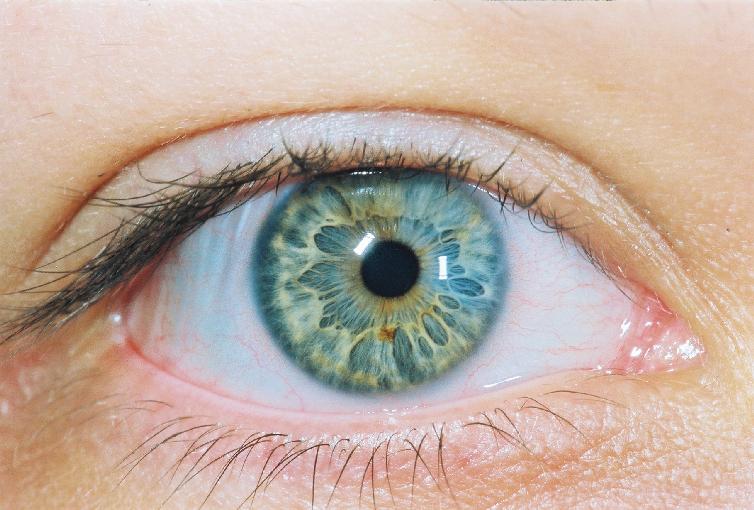
"It was as though her eyes were shattered prisms, the dots of blue and gray and green like broken bits of sparkle."
Capote, Truman. Breakfast at Tiffany's and three stories. 2nd Vintage International ed. New York: Vintage Books, 2012. Print.
Commentary:
In this sentence, Capote provides heavy imagery on the eyes of Miss Holly Golightly. With the words "shattered prisms," the reader envisions shards of fragmented crystal structures. Following that, the shards are revealed to be multicolored with blue, gray, and green and are compared to "broken bits of sparkle" through simile. The "bits of sparkle" creates an image of something that twinkles in the light such as glitter or pixie dust. This sentence produces a crystal clear depiction of Miss Golightly's eyes.

(Source)

Sentence 5

"Imagination, of course, can open any door -  turn the key and let terror walk right in."
Capote, Truman. In Cold Blood: A True Account of a Multiple Murder and its Consequences. New York: Vintage Books, 1994. Print.
Commentary:
This sentence contains primarily abstract diction with figurative language. For example, personification is found when imagination is given the ability to "open any door" and when terror is permitted to "walk right in." When speaking of imagination opening doors, Capote means to say that the mind is able to create endless, infinite opportunities and scenarios for one to wander.  One of these "doors," when opened, has the ability to emotion in, one being terror. The sentence contains some informal or casual language as well with the phrases "of course" and "walk right in."

(Source)

Sentence 4

"Then, touching the brim of his cap, he headed for home and the day's work, unaware that it would be his last."
Capote, Truman. In Cold Blood: A True Account of a Multiple Murder and its Consequences. New York: Vintage Books, 1994. Print.
Commentary:
Capote, through this sentence, creates a sense of foreboding and informs the reader that something terrible is about to happen, that the character, Mr. Clutter, is going to die soon. He employs simple vocabulary and simple imagery with "touching the brim of his cap." It is such a simple act and with the words "headed for home and the day's work" present a sense of casualty. The tone switches from casual to ominous when Capote states that Mr. Clutter has lived his final day. Dramatic irony is created because the reader, or the audience, is aware that Mr. Clutter is about to die, but the character himself is unaware of that fact, which results in an added intensity to the sentence. It's as if one can hear the "dun dun dun" found in the movies.

(Source)